
The Rise in Social Subs

In recent years, subtitles have evolved from an accessibility feature into a cultural norm. What was once primarily associated with foreign films or hearing accessibility is now embedded into the way we consume content every day. From short-form clips to long-form entertainment, subtitles, particularly “social subtitles,” have become a default viewing preference across generations. 

As mobile-first consumption dominates and attention spans fragment, subtitles are no longer optional. They’re essential.
Social_Subs_Website_News__1_.png

What Are Social Subtitles? 

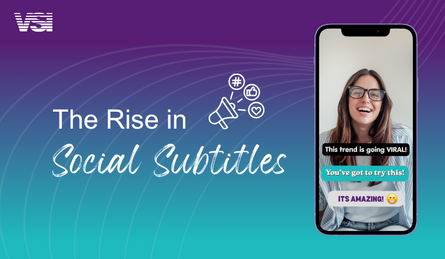
Social subtitles (often shortened to “social subs”) are on-screen captions specifically designed for digital and social media content. Unlike traditional closed captions created primarily for accessibility compliance, social subs are: 

  • Stylised and branded 

  • Designed for mobile viewing 

  • Timed for short-form engagement 

  • Often baked directly into the video 

They are optimised for platforms like TikTok, YouTube Shorts, Instagram, and LinkedIn, where content is fast, scrollable, and frequently watched without sound. 


Some Stats 

The shift toward subtitles is backed by compelling data: 

  • 61% of 18–24-year-olds prefer to read text while watching video content. 

  • 80% of videos consumed on mobile are watched without sound. 

  • About 3 in 10 adults aged 60+ who use subtitles say they use closed captions due to hearing impairment, compared with only 7% of younger adults. 

These numbers show that subtitles are not just about accessibility, they’re about behaviour. Viewing habits have fundamentally changed.

Reasons Why People Watch with Subtitles On 

There are multiple reasons why subtitles have become the norm rather than the exception: 

  • Misunderstanding Accents or Missing Words: Global content means exposure to a wide range of accents and dialects. Subtitles help ensure clarity and prevent viewers from disengaging. 
  • Watching in Loud Environments: Commuting, gyms, cafés, and offices are not audio-friendly environments. Subtitles make content accessible anywhere. 
  • Poor Audio Quality: Even professionally produced content can suffer from unclear sound, background noise, or uneven mixing. Subtitles eliminate confusion. 
  • Multi-Tasking: Many viewers scroll while working, cooking, or studying. Subtitles allow them to follow content without fully committing their attention to audio. 
  • Hearing Impairment: For millions of viewers, subtitles are not a preference; they are essential for accessibility. 
  • Watching With the Sound Off: Auto-play defaults on social platforms often start muted. If your video relies on audio alone, you risk losing viewers in the first few seconds. 
  • Learning a New Language: Subtitles assist language learners in connecting spoken and written words, increasing comprehension and retention.

Why You Should Be Using Subtitles for Your Social Content 

Subtitles are no longer a “nice-to-have.” They are a strategic advantage. 

  • Increase Retention Rates: The first three seconds determine whether someone scrolls past or stays. Subtitles immediately anchor attention and improve watch time. 
  • Boost SEO and Searchability: Text-based elements improve discoverability. Platforms index captions, and subtitles create additional searchable content, improving reach. 
  • Easier Translation for Global Audiences: With subtitles in place, translating content becomes significantly simpler, helping brands expand internationally without recreating entire videos.

Platforms Driving the Social Subtitle Movement 

Social subtitles are particularly critical on short-form and mobile-first platforms: 

TikTok: A sound-off culture dominates here. Captions increase completion rates and engagement. 

YouTube Shorts: Short attention spans require immediate clarity. Subtitles help hook viewers quickly. 

Instagram: Reels, Stories, and in-feed videos perform better when message delivery doesn’t rely solely on audio. 

LinkedIn: Professional audiences often browse during work hours, meaning silent viewing is common.

The Bigger Picture 

The rise of social subtitles reflects a broader transformation in content consumption: 

  • Mobile-first behaviour 

  • Global audiences 

  • Accessibility awareness 

  • Short-form dominance 

  • Scroll-based discovery 

In today’s digital landscape, subtitles aren’t just supporting content; they are part of the content. They shape tone, pacing, branding, and viewer experience. 

As entertainment and social media continue to merge, one thing is clear: if your content isn’t designed to be understood without sound, you’re already behind. 

Subtitles aren’t a trend. They’re the new standard. 

Let's talk

Are you ready to take your content global? Our experienced team is on hand to support you every step of the way. Interested in finding out more?